Before the boardroom, the jump.
Executives like to talk about pressure. I measure it differently. This is the part of the record that never fits on a résumé: the 75th Ranger Regiment, a parachute malfunction at altitude, and the twenty-five secondsthat have governed every decision I’ve made since. Two companies built and sold, a NASDAQ acquisition, and a region that now leads a national platform. All of it traces back to a standard set at Fort Benning.
Seven chapters2005 to todayNo embellishment required
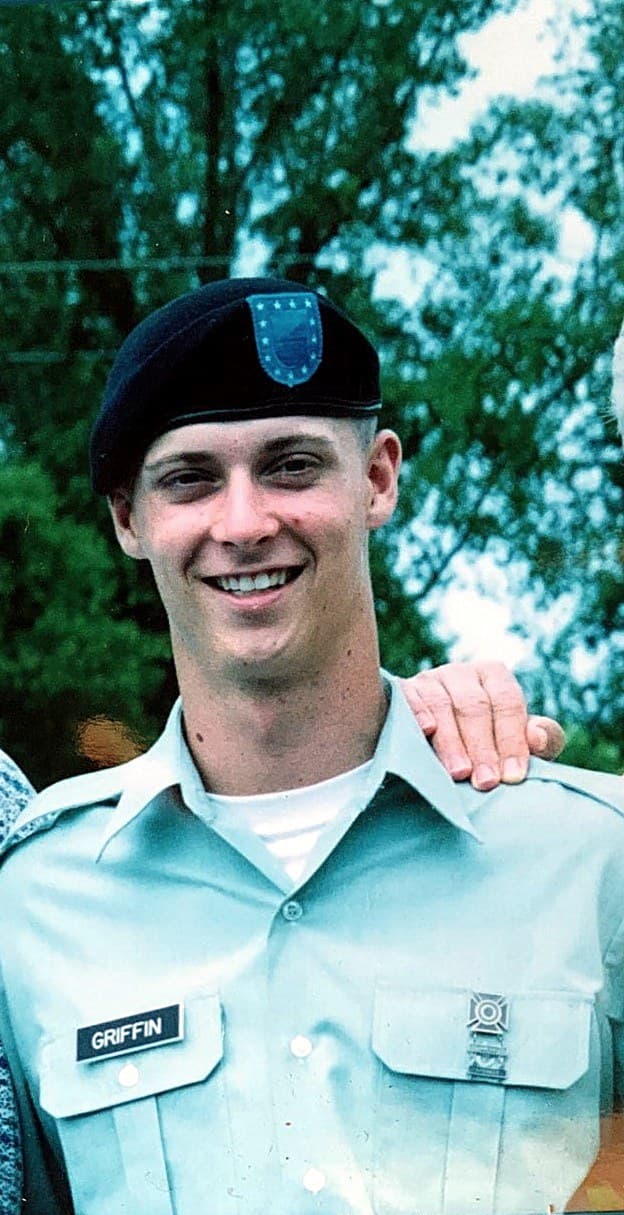
The standard finds you first.
I was selected for the 75th Ranger Regiment, one of the most elite special operations units the United States military fields. People imagine that path as a highlight reel. It isn’t. The path to a Ranger unit is not designed to build you up. It is designed to find the exact point where you break, and then ask you, plainly and repeatedly, whether you intend to continue. Most men answer no. Nobody blames them.
The training isn’t designed to build you up. It’s designed to find where you break, and ask whether you intend to continue.
What the Regiment actually equips you with isn’t gear. It’s a code: integrity, honor, and a sense of duty that places the mission above your own security, because the mission is usually a matter of life and death, and trust between Rangers has to be absolute. I have carried that into every room I’ve entered since.
· Rangers lead the way· Sua Sponte
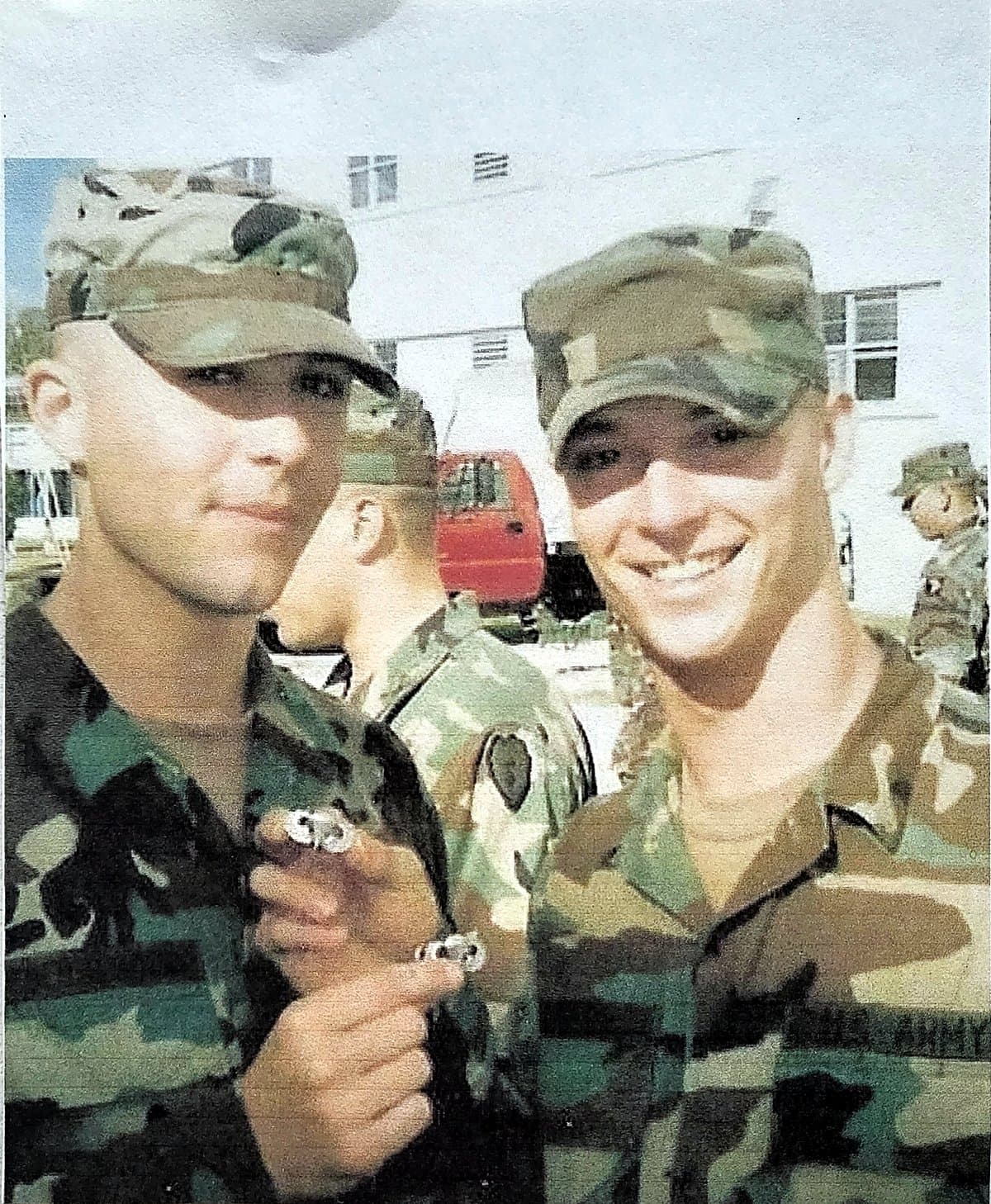
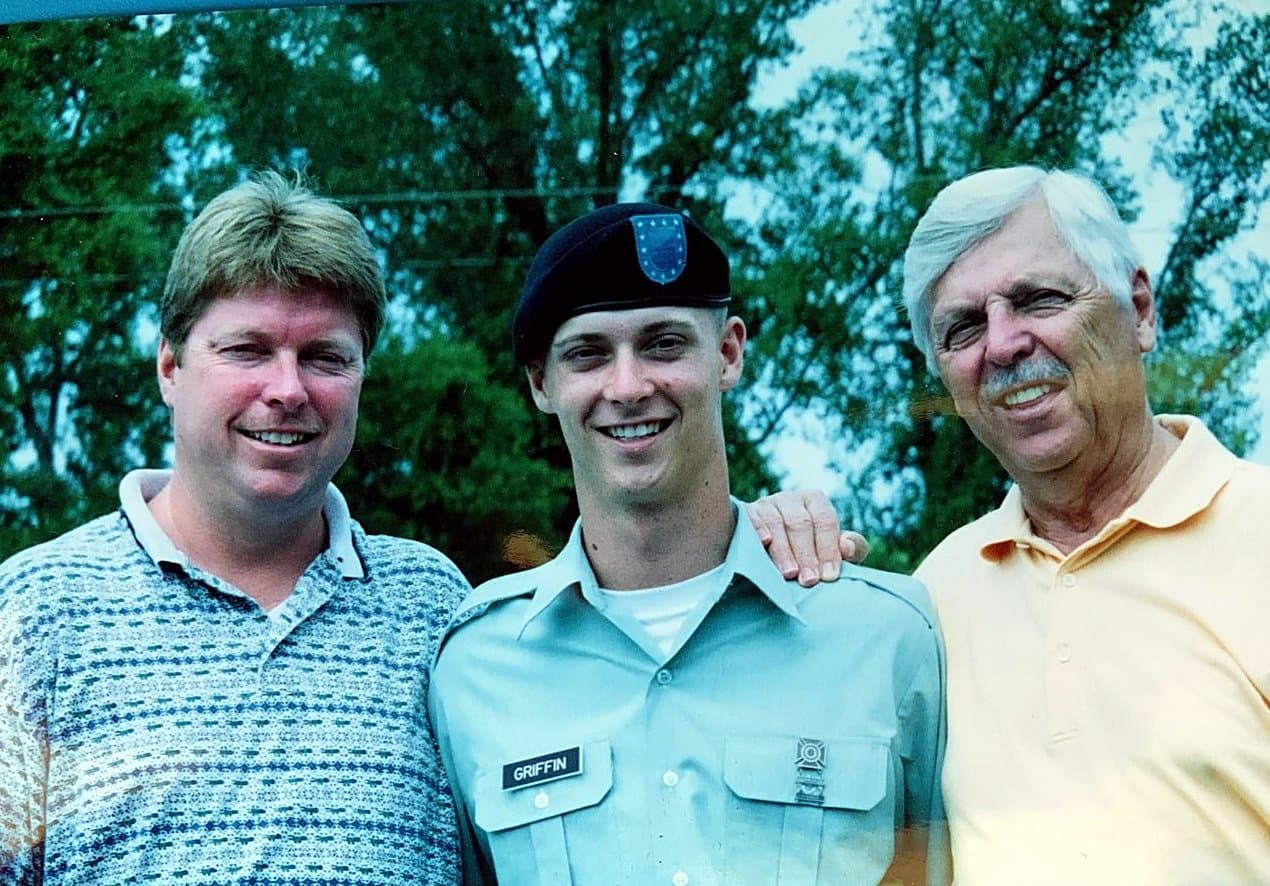
The canopy opened wrong.
A jump is a procedure. You rehearse it until it is boring, because boring is what keeps planeloads of men alive. A normal jump gives you about sixty seconds under canopy. Mine had run exactly as drawn a dozen times. Then one didn’t. I exited the aircraft the way I had been trained to, and looked up at a canopy rolled tight on itself. Jumpers call it a cigarette roll. Open, but not flying.
What I had was maybe twenty-five seconds. I pulled the risers apart with everything I had and kicked a bicycle motion to spin the twist out of the lines. The canopy unwound, and left me oscillating so hard I couldn’t read my own speed or direction of fall. There was no committee. No second opinion. No more altitude coming.
The fix is why I’m alive. It is not why I’m whole. The landing tore my right leg up badly, and here is what that unit does to your standards: I got up and covered the five miles to catch up with my jump stick on that leg. The injuries ended with an honorable medical discharge. In 2007 I took the uniform off for the last time.
A parachute accident ended my military career. It didn’t end the standard it set.
Every business decision since has been easier than that jump. I’ve made every one of them like it mattered as much.
Bring me the problem. I’ll provide the solution.
Revenue, learned from the ground.
There is no field on a civilian résumé for “held to the Ranger standard.” The market didn’t owe me anything for it, and I didn’t ask. I started where revenue actually starts: on the floor. At CDW, as an account manager, I learned that every dollar on an income statement began as one person keeping a promise to another.
Then Toshiba: outside sales rep, Hawaii. Paradise, if you’ve never carried a quota through it. I worked the territory the way I’d been taught to work an operation. Plan, execute, debrief, adjust, repeat. Eighteen months later I was the sales manager. Not because anyone handed it over. Because the numbers kept making the argument for me.
Those years are why no dashboard has ever been able to lie to me. I know what the frontline knows, because I have been the frontline.
Every seat, earned the hard way.
In 2011 I founded Optimized, and for a long stretch the entire company was me. By day I was the whole sales team: the cold calls, the pipeline, the proposals, the contracts. By night I was the whole delivery team: the SEO, the PPC, the social campaigns, the web development. Every deliverable a client paid for passed through my hands, because there were no other hands.
By day I was the entire sales team. By night, the entire delivery team. There were no other hands.
It never took a dollar of outside money. Optimized bootstrapped its way to 23 employees, $5M in revenue, and seven satellite offices across the continental U.S., then sold to an equity firm. Alongside it I co-founded Florida Landscaping Services, a partnership that ended in a successful exit. Every role I hire for today, I have personally done.
And in 2018, while running companies, I took on a different kind of build: a U.S. congressional campaign, constructed from zero. The organization, the field operation, the communications, all of it stood up from nothing, culminating in a live debate on statewide PBS, unscripted, under the lights. As a test of leadership and communication under maximum public pressure, there is nothing else like it in civilian life.
The system, proven at scale.
The operator years came next, the ones a résumé lists cleanly and the work never was. At Wensco I owned every outcome, and the records for sales, revenue, and growth fell one after another.
Then AcreValue, the one that proved the system travels. I came in fractional: a platform with 1.5 million users and recurring revenue that had declined two straight years. I rebuilt the go-to-market from the inside sales calls out, repositioned the product, returned MRR to growth, and set the table for the ending: acquisition by CoStar Group, a NASDAQ company. A turnaround that ends on a stock ticker doesn’t need adjectives.
Atrium handed me a $25M budget across six brands, and it was deployed the way a budget that size should be: with discipline, attribution, and zero sentiment. Vertex made me Chief Marketing Officer, and within four months inbound calls were up 490% and the booking rate had gone from 16% to 59%. Today I run Midwest marketing for Infinity Home Services, and the region leads the entire company: the #1 performing region, with double-digit year-over-year sales growth.
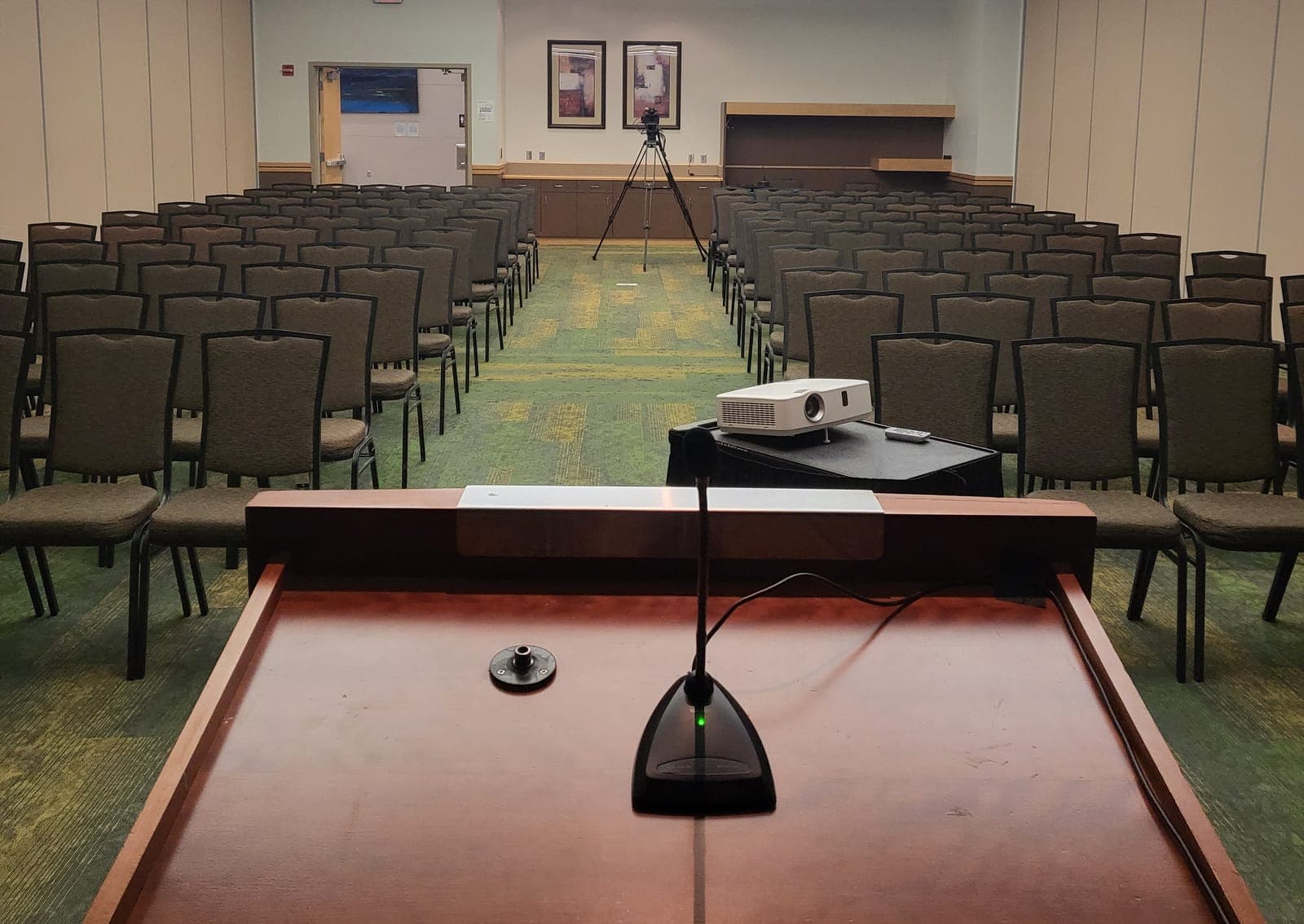
You’ve just read the track record. It’s available in four shapes.
Hire me fractionally
Part-time executive leadership, embedded with your team.
Defined scopeHire me for a project
A raw-data audit or an AI build, one clear deliverable.
EventsBook me to speak
Strategy, competition, and AI, delivered with composure.
Full-timeHire me as an executive
CMO, CEO, or senior growth leadership, P&L-accountable.
Unfinished is not a word I keep.
There was one item left open on the ledger, and it had been open for twenty years. I left for the Army before the bachelor’s degree was done, and life kept not requiring it. The companies didn’t ask. The campaigns didn’t ask. The C-suites didn’t ask. But the standard doesn’t accept “not required.”
So I went back. Central Michigan University, while simultaneously running a $25M growth engine at work. I finished summa cum laude, with a 3.97, twenty years after the first credit was earned. I did it to be a good example to my children: you can do it, and it doesn’t have to happen in any specific order of life. Then, because a standard doesn’t know how to stop, I enrolled again: a dual MBA and M.S. in Information Systems at Auburn University, on schedule for 2027.
Twenty years later: summa cum laude, 3.97. Earned nights and weekends, next to a $25M P&L.
People ask what a Ranger tab has to do with marketing. Everything. The plan. The rehearsal. The brutal honesty about what the data actually says. Discipline isn’t a slide in my deck. It’s the operating system.
The résumé stops at the water’s edge.
Everything above is what I do. It is not the whole of what I am. Before any title on this page, I’m a husband and a father, a family man building a life in Michigan, which is what all the other chapters were for.
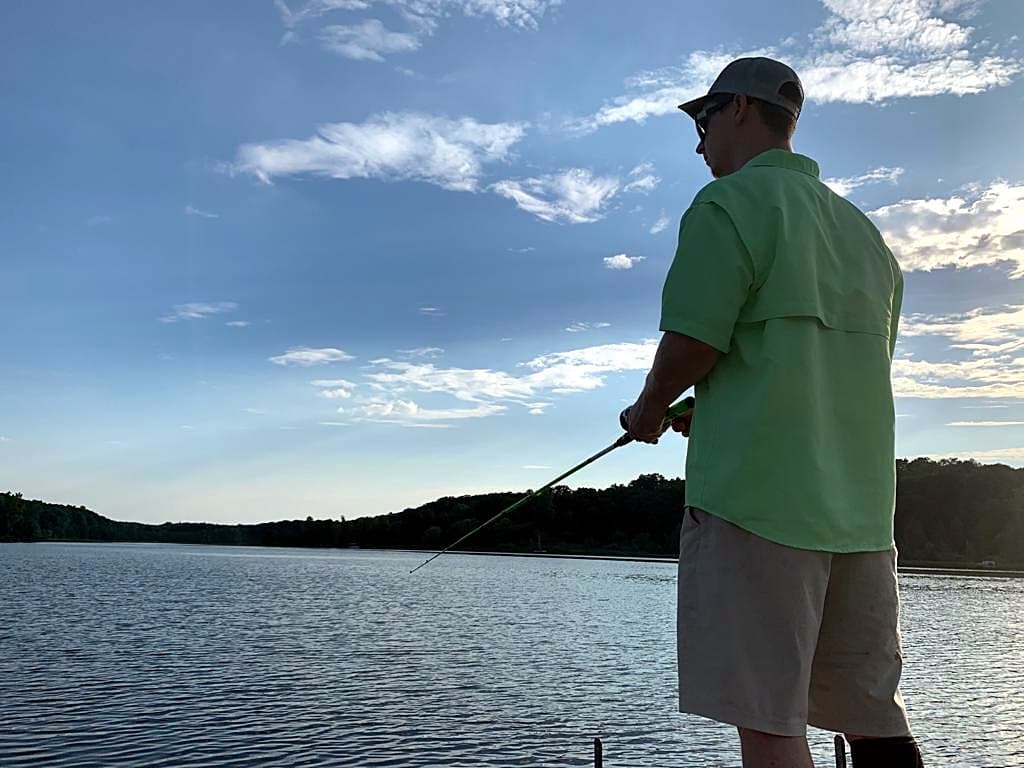
When the calendar allows, we’re outside: Michigan lakes and long days on the water. Time outdoors keeps honest books. The water doesn’t care what you ran last quarter, and neither do the people who matter most.
And I’m a Christian. I don’t lead meetings with it, and I won’t hide it either. The standards named throughout this story, integrity, service, stewardship, didn’t come out of a leadership book. They come from somewhere deeper, and they don’t clock out when I do.
One standard: at home, in the field, and in the boardroom.

Twenty years, one line.
Every chapter above, laid end to end. No gaps, no gloss. The same standard, applied to whatever the year demanded.
U.S. Army · 75th Ranger Regiment
Airborne Ranger, Fort Benning. A parachute malfunction, a twenty-five-second decision, and an honorable medical discharge that ended the career, not the standard.
The sales floors
CDW account manager, then Toshiba outside sales in Hawaii. Promoted to sales manager in eighteen months.
Founder ×2 · exits ×2
Optimized: a team of one, bootstrapped to 23 employees, $5M, and seven satellite offices, sold to an equity firm. Florida Landscaping Services: co-founded, exited successfully.
U.S. congressional candidate
Built a full campaign organization from zero, culminating in a live debate on statewide PBS. A leadership-and-communications chapter run on honor and integrity.
Head of Marketing to CMO
Wensco, Roofing GR, AcreValue through its CoStar NASDAQ acquisition, Atrium with $25M across six brands, then Vertex as CMO: inbound calls up 490%, booking rate from 16% to 59%.
Central Michigan University · B.A.
The degree finished twenty years after it started. Summa cum laude, 3.97, earned while running a $25M growth engine.
Infinity Home Services · regional marketing
The Midwest region leads the company: #1, with double-digit year-over-year sales growth.
Auburn University · MBA + M.S. IS
Dual master’s in progress at the Harbert College of Business. The standard doesn’t know how to stop.
You’ve read the story. Put it to work.
The standard that survived a failed canopy is the same one I’ll bring to your P&L. If your company has a mission worth that kind of discipline, tell me about it.